
The complete guide for financial advisors
YouTube marketing for financial advisors, start to first client
YouTube works for financial advisors when it answers the questions your ideal clients already ask, in plain language, before they ever book a call. This guide covers the whole system. Who the channel is for, which videos to make first, how to title and script them, how compliance review fits in, and how a video library turns into first meetings that feel like second ones.

 Most first meetings now start at a kitchen table, before you are in the room.
In this guide
- Does YouTube work for advisors?
- Who your channel is for
- The first videos to make
- Finding topics people search
- Titles and thumbnails
- Scripts that hold attention
- Filming without losing a week
- Compliance rules
- YouTube Shorts
- Turning viewers into clients
- YouTube SEO for advisors
- How long it takes
- Why channels stall
- Do it yourself or hire help
- Questions advisors ask
Does YouTube actually work for financial advisors?
Yes, when the goal is trust and first meetings rather than views. A financial advisor does not need a big channel. A few hundred of the right people watching you explain the things they worry about is enough to change who calls you and how those calls go.
The way people hire an advisor has changed, even when the introduction still comes from a referral. Someone hears your name from a client, a CPA, or a friend at church. Then, before they reach out, they look you up. In a 2025 survey of 500 U.S. adults earning over $100,000 who plan to hire an advisor, Wealthtender found that 96% will research an advisor online before making a decision. The same share said they would still research an advisor who came highly recommended.
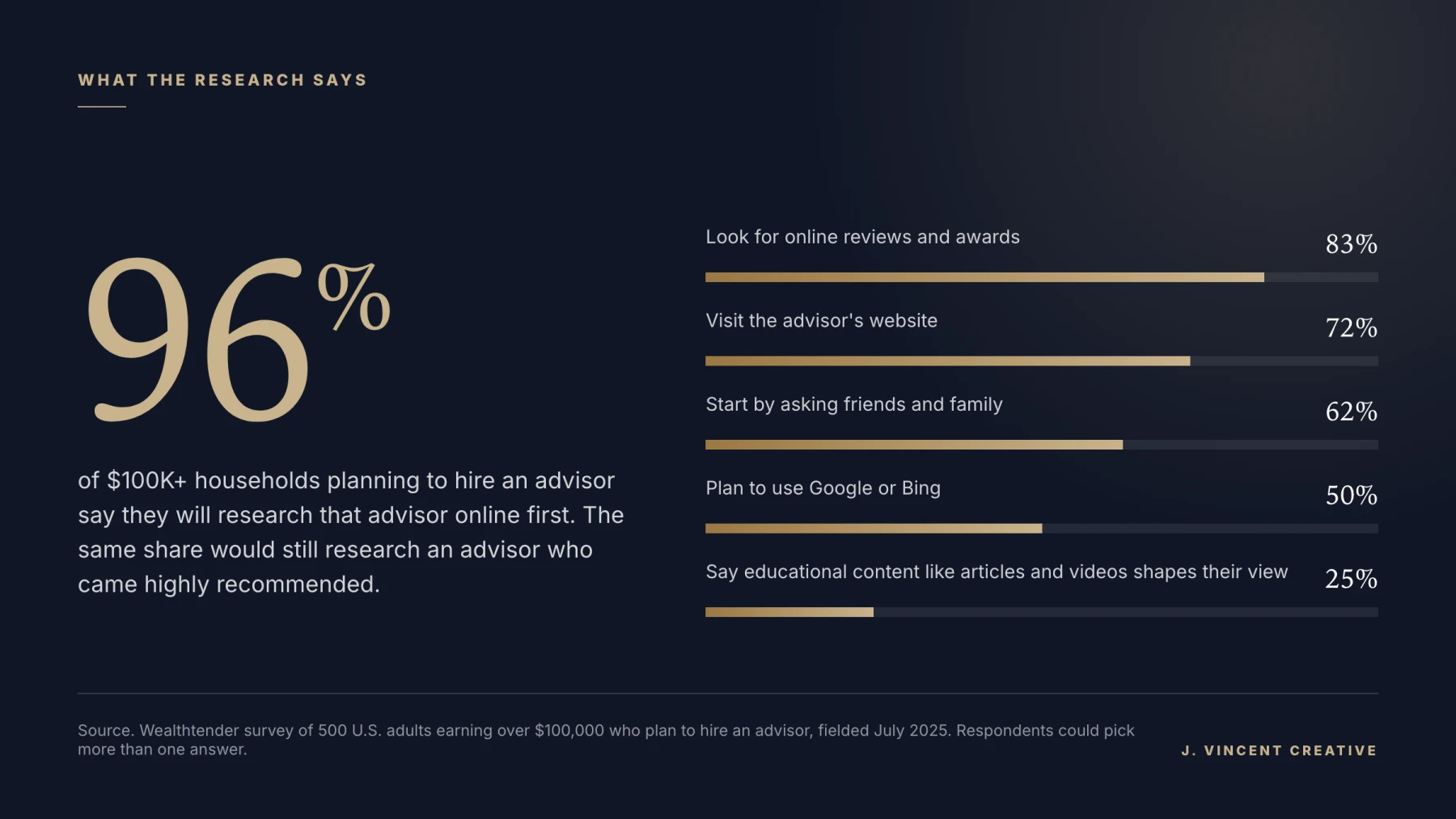
So the real question is what they find when they look. For most advisors it is a firm bio page, a LinkedIn profile, and a headshot. None of that lets a prospect hear how you think. A video does. Ten minutes of you calmly explaining a Roth conversion or how you charge tells a prospect more about whether they would trust you than any credential on your wall.
That is the job of an advisor's YouTube channel. It is the first meeting before the first meeting.
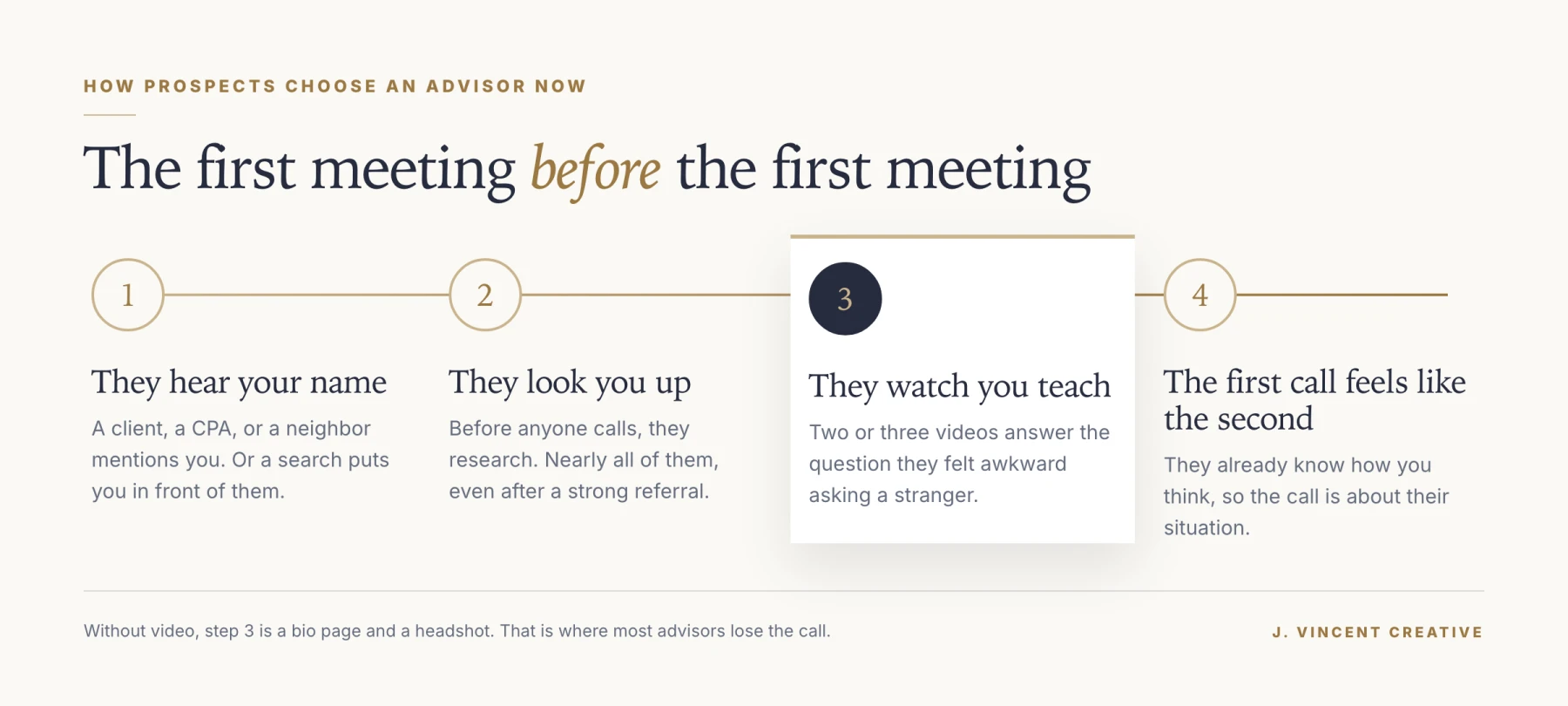
I learned this about my own business before I ever said it to a client. When someone was referred to me and pointed to my YouTube and LinkedIn first, the call was easy. They already knew what I did and how I thought. We spent the time on their situation.
When the call came from a cold message, it often opened with "I don't even know why I'm on this call. What do you do again?" Same person on my end. Completely different first meeting. The only thing that changed was whether they had seen me before we talked.
There is a second reason YouTube works for advisors, and it is easy to miss. Video re-introduces you to people who already know you. Former coworkers, parents from your kids' teams, the couple from small group. They know you as a person. Seeing you explain retirement income every week is what makes them think of you as the person to call about their money.
Who should your channel be for?
The most common reason an advisor channel never gets traction is that it is made for everyone. "Investors" is not an audience. Neither is "people who want to retire comfortably." YouTube rewards channels that a specific viewer can recognize as being for them within a few seconds.
Start with the clients you already serve best and would happily clone. Then describe them in one sentence that names their stage of life and the moment they are in.
- Pre-retirees five to ten years out who have saved well and are not sure it adds up to a paycheck.
- Business owners thinking about selling or handing off the company in the next few years.
- Physicians and dentists who started earning late, carry debt, and have little time to think about any of it.
- Federal employees trying to make sense of FERS, TSP, and a pension decision.
- Widows and divorcees suddenly making the decisions a spouse used to handle.
- Families in your town who would rather sit across from someone local.
You can serve more than one of these. Your channel should lead with one. When a pre-retiree in Alpharetta finds a video titled for pre-retirees, from an advisor who mentions Georgia taxes and North Fulton, the video feels like it was made for them. That feeling is what earns the click, the watch, and later the call.
A quick test. Read your last five video titles to one of your best clients. If they would not say "that's me" about at least three of them, the channel is still talking to everyone.
One more thing about audience. Make the video about the viewer, not about you. Prospects do not want your process, your awards, or your firm's history first. They want to see their own situation explained by someone who clearly understands it. The advisor is the guide in the video, never the subject. A useful check is to count how often your script says "you" compared with "I" or "we." Aim for three to one.
What videos should a financial advisor make first?
Make the videos a prospect needs before they are willing to book a call. In practice that means mapping videos to the three stages a person moves through on the way to hiring you.
- They feel it. Something is nagging at them. Do we have enough? What happens to our taxes? Did we wait too long?
- They try to understand it. They start learning how the pieces work. Roth conversions, Social Security timing, how a portfolio turns into income.
- They choose who to trust. They compare advisors. How do you charge? What is it like to work with you? Are you right for someone like them?
Four videos per stage gives you twelve, which is roughly three months of weekly publishing and a library that can carry a prospect from worry all the way to a decision.